Στείλτε μας email
Solutions

Ship Hull Cleaning

— Automated Underwater Hull Maintenance Solution for Ports & Marine Operations

1. Application Background

Ship hull cleaning is a critical maintenance task in maritime operations, directly affecting fuel efficiency and operational cost.

During long-term navigation, hull surfaces accumulate marine organisms such as barnacles and algae, along with sediment and oil residues. These deposits increase hydrodynamic resistance, resulting in higher fuel consumption and reduced vessel efficiency.

Traditional cleaning methods include dry-docking, diver-based cleaning, and basic surface cleaning tools. Each approach has limitations in cost, safety, or operational efficiency.

As a result, there is a growing shift toward robotic and automated underwater cleaning systems.

2. System Overview

This solution is based on an underwater hull cleaning robot system , designed for automated maintenance of ship surfaces.

The system integrates:

Underwater robotic cleaning platform

High-pressure jet and mechanical brushing system

Navigation and positioning system

Remote control and monitoring platform

It enables structured and repeatable hull cleaning operations.

3. Hull Cleaning Robot System

Underwater Mobility & Attachment

Stable operation along curved hull surfaces

Magnetic or suction-based attachment (depending on hull material)

Resistance to underwater currents

Section-based cleaning coverage

Cleaning System

High-pressure water jetting

Mechanical brushing for hard fouling

Rotating cleaning heads

Adaptive cleaning intensity control

Navigation System

Inertial navigation system (INS)

Sonar-assisted positioning

Hull-guided path tracking

Segment-based route planning

Remote Operation System

Real-time underwater video feedback

Remote mission control

Live monitoring dashboard

Fault detection and alarms

4. Operational Workflow

The system is deployed when the vessel is stationary in port or controlled waters.

The robot enters the underwater environment and attaches or aligns with the hull surface.

Cleaning is performed in segmented areas following predefined paths, with continuous data and video transmission to the control center.

After completing each section, the robot proceeds to the next area until full coverage is achieved.

5. Application Scenarios

Commercial cargo vessels

Container ships and bulk carriers

Offshore engineering vessels

Tankers and LNG carriers

Port maintenance operations

6. System Value

Increased cleaning efficiency

Reduced diver-related risks

Lower maintenance and docking costs

Potential for non-dry-dock maintenance operations

7. Scalability

Multi-robot coordination

Hull condition inspection modules

Integration with port management systems

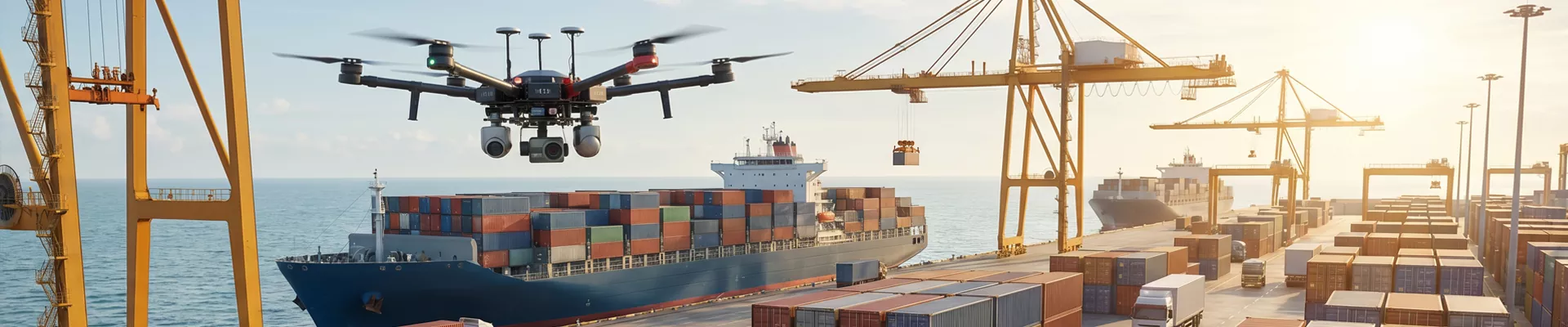
Drone-assisted surface monitoring

8. Conclusion

The ship hull cleaning system transforms traditional diver-based and dry-dock cleaning methods into a remotely operated robotic process, providing a safer, more efficient, and scalable solution for marine maintenance operations.

Προηγούμενος :
Επόμενο :
ΗΛΕΚΤΡΟΝΙΚΗ ΔΙΕΥΘΥΝΣΗ
info@tjwdhk.cn
Τηλ
+86-15022269233
Κινητό
Διεύθυνση
Room 3025, Building 1, Zone F, Guangxuan Road, Airport International Headquarters Base, Dongli District, Tianjin City, China
X
Χρησιμοποιούμε cookies για να σας προσφέρουμε καλύτερη εμπειρία περιήγησης, να αναλύσουμε την επισκεψιμότητα του ιστότοπου και να εξατομικεύσουμε το περιεχόμενο. Χρησιμοποιώντας αυτόν τον ιστότοπο, συμφωνείτε με τη χρήση των cookies από εμάς. Πολιτική Απορρήτου
Απορρίπτω Αποδέχομαι